
Inspiration from Children: Voices from the Peace Education Project
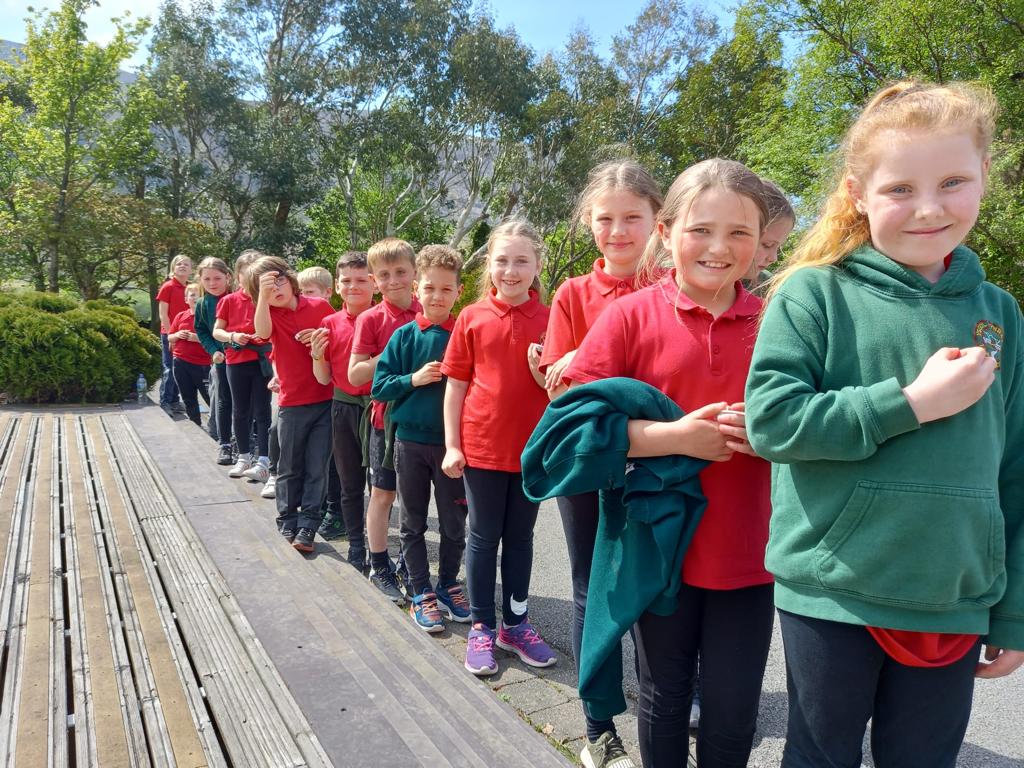
School children visit the World Peace Flame monument in North Wales
The peace education project ,delivered through the WPF education pack, is opening up meaningful conversations among pupils. As part of the programme, students were invited to reflect on two simple but powerful questions: What does peace mean to you? and What small things can we do to help others?
Their responses offer a thoughtful and hopeful glimpse into how young people understand the world – and their place in shaping it.
What Does Peace Mean to You?
For many pupils, peace begins close to home – with friendships, kindness, and the absence of conflict. “Everyone getting along… no fighting – everyone is just friends,” one pupil shared. Another described peace simply as “making friends and there’s no fighting.”
Through the WPF education pack, pupils are encouraged to think more deeply about how their actions affect others. This is reflected in their responses. Several spoke about helping those in need – offering food, shelter, or support to people facing hardship. Others focused on taking responsibility in everyday situations, such as stepping in when arguments happen or making sure no one feels left out.
There is also growing awareness of peace on a global level. Some pupils connected their learning to ideas about resolving conflict between countries – understanding why disagreements begin, communicating openly, and finding ways to move forward. As one student explained, peace can come from “finding out why [a conflict] started… and trying to get on with each other.”
These reflections show how the project is helping pupils connect personal behaviour with wider ideas of justice, empathy, and understanding.
What Small Things Can We Do to Help Others?
When asked how they can make a difference, pupils focused on small, practical actions – demonstrating that peace is something built through everyday choices.
Many highlighted the importance of kindness in school: helping classmates with their work, including others at lunchtime, or simply being friendly. “If someone is sitting on their own, go and sit with them,” one pupil suggested. Others mentioned sharing what they have, whether that’s food, time, or attention.
The idea of giving back also featured strongly. Pupils spoke about donating to charity, taking part in charity runs, and supporting people in their communities. At home, helping family members – doing chores, supporting siblings, or showing appreciation – was seen as equally important.
Above all, there was a clear message that even the smallest gestures matter. Smiling, being cheerful, and showing kindness can have a ripple effect. As one pupil put it, “Just be nice… it makes them happy as well.”
A Generation Learning to Build Peace
These reflections highlight the impact of the WPF education pack in encouraging pupils to think critically, act compassionately, and see themselves as active contributors to a more peaceful world.
What stands out most is not just what these pupils say, but how naturally they say it. Peace, to them, is not an abstract ideal reserved for politicians or history books. It is something lived daily – in friendships, in families, in classrooms.
Their reflections are a reminder that peace education is not about grand speeches or complex theories. It is about nurturing empathy, encouraging kindness, and empowering young people to see their role in shaping a better world.
Their voices remind us that building peace starts small – and that with the right guidance and space to reflect, young people are more than ready to lead the way.
Here are their responses:
What does peace mean to you?
- My idea of peace is everyone getting along with each other. There’s no fighting – everyone is just friends with each other. It’s nice in the world – everybody friends.
- I think peace is to make friends and there‘s no fighting.
- I think peace is where people help each other out. So there are people on the streets who need money and people can help them – maybe give them a warm meal or a place to stay..
- I think peace is if someone’s on the field and they’re fighting you can stop the fight and tell someone.
- Help people to play – if someone is sitting down and doing nothing, help them.
- I think peace is when everyone gets on and there’s no fighting and no guns.
- I think peace is – when wars start to find out why the war started and what the disagreements were. Make friends and just really try to get on with each other and if the other person has said something that’s annoyed you, you’ve got to tell them and then they can say sorry.
- I think peace is when all the countries get on and there’s no war because of religion and such things.
- I think peace is getting on with your friends.
- I think peace is stopping violence and everyone being friends.
What small things can we do to help others?
- Give money to charity.
- Sign up to do a charity run.
- Do friendly things for others – like if they are stuck in a lesson, help them out.
- Help your family members – like if your little brother is stuck with his work and your mother’s making tea…
- If you’ve got a bag of sweets and someone else doesn’t have one, share yours with them.
- Sometimes at lunchtime there’s no room on the table so someone has to go onto another table on their own, so a couple of us go to the other table to keep them company.
- If someone does something for you, you should do something back for them, like buy them a little present.
- Just be nice to them.
- For your mum or your dad just do a chore – that makes all the difference really .. like just do the dishes.
- If your mum is really hard working – like she has a busy job or she’s at home doing the washing or the dishes, on Mother’s Day or her birthday she gets a really special day. But really you should treat her like that all the time.
- Just be cheerful around people and smile – it makes them happy as well.